FREE SHIPPING ON ALL ORDERS OVER $150 AUSTRALIA-WIDE*



Related Products
![Zirconium Crucibles [low form]](https://globallabsupplies.com/wp-content/uploads/2024/02/Untitled-1-450x450.png)
Zirconium Crucibles [low form]
Add to cart
Zirconium exhibits superb corrosion resistance in most organic and inorganic acids, salt solutions, strong alkalis and a few molten salts.
The passive oxide film (corrosion barrier) is stable in both reducing and oxidizing conditions. Zirconium is excellent in both acid and base solutions.
The temperature limit for use in air is
about 450˚C to 500˚C.
In Stock
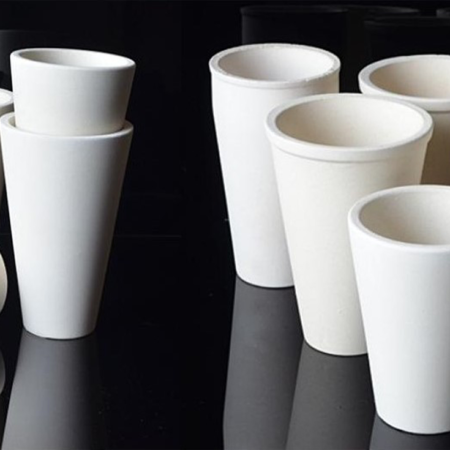
Fire Assay Crucible
Add to cart
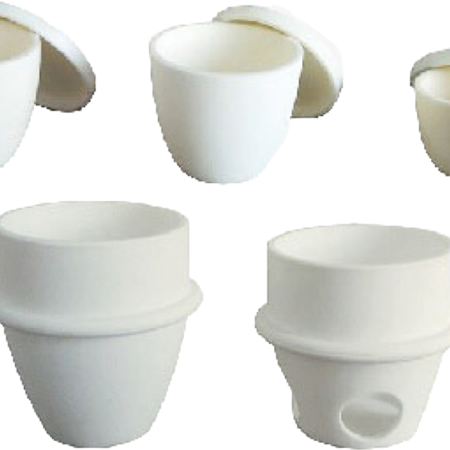
Gold Smelting Crucibles As Name of Fire Assay Crucibles,have a higher than normal resistency to cracking under fire assay conditions. Our crucibles and refractory products are used in laboratories throughout international marketplace. Our Crucibles can be used for 3-5 times. We have a variety of shapes and sizes available to cater to specifications required.
In Stock
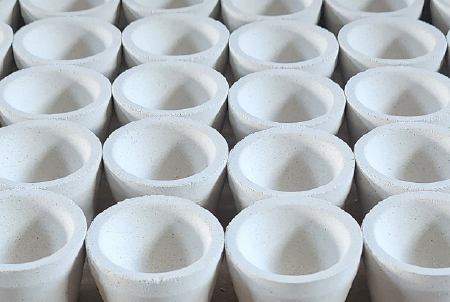
Magnesia Cupel
Add to cart
Cupel is a shallow, porous crucible with approximately 96% magnesia. It is especially used to separate gold, silver, and precious metals from lead buckles in the process of Pb-Fire assay. By using high-quality raw materials and scientific formulas, GLS’s fire assay magnesia cupel has a smooth surface, high mechanical strength, and will not crack and pit during high-temperature cupellation.
In Stock


Tungston Carbide Bowls
Add to cart
The series of grinding bowls of Global Lab Supply has good wear resistance and impact resistance. A unique range of bowls from 40 to 5000g nominal capacity. Global Lab Supplies delivers this high-capacity, high production bowl to the sample preparation needs.
In Stock
![Zirconium Crucibles [straight wall]](https://globallabsupplies.com/wp-content/uploads/2024/02/Untitled-1-1-450x450.png)
Zirconium Crucibles [straight wall]
Add to cart
Zirconium is our most effective crucible material for fusions using sodium carbonate or sodium peroxide. It is an excellent low-cost replacement for platinum. And, based on an average of 100 fusions per crucible, it is more cost effective than less expensive porcelain or steel crucibles.
Other advantages of zirconium are its complete resistance to the action of most solvents of all concentrations such as nitric, hydrochloric, sulfuric and perchloric acids.
This allows the fusions to be dissolved out of the crucible completely with little or no contamination of the sample. Alkaline solvents such as ammonium hydroxide, acetate sulfide, carbonate and (Na, K) hydroxide, sulfide, carbonate and cyanide are also without effect.
In Stock

Pulverizing Bowls
Add to cart
Pulverizing bowl: also called pulverising mill grinding bowl, pulverizer mill bowl. It is a grinder that grinds coarse material into fine powder. When working, put the grinding bowl into the laboratory sample pulverizer or vibration grinder card slot. The motor drives the grinding bowl to eccentrically vibrate. After 2-6 minutes of work, the material can reach 80-300 mesh for testing.
In Stock


